
Exhibitions
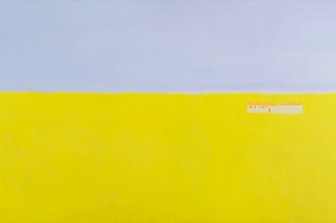
Northern Wind | Israeli Art from the Museum's Collection
A north wind blows through the collection of Haifa Museum of Art. The museum’s location in the city of Haifa is reflected in its collection, which contains many works by artists based in Haifa and the north, attesting to Haifa’s unique identity: as a port city, the relation to immigrants and refugees repeatedly surfaces in the works; as a workers’ city, many of the works address class issues; and as a city nestled in a unique topography between the sea and the mountain, the works delve into interrelations between the earthly and the spiritual. From its focal point in the north, the collection also converses with Israel’s art centers, with Arab culture, and with Western modern art: turning south, to artistic practice in Tel Aviv and Jerusalem; east, beyond the Jordan Valley; and west, to what is happening overseas.
Saturday, 22.02.25
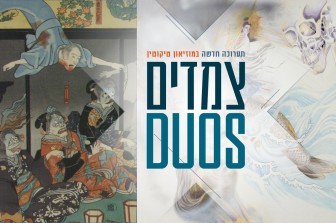
Duos
The "Duos" exhibition connects between traditional Japanese woodblock print artists and contemporary Japanese and Israeli artists. The first duo, Hiroshige X Tabaimo, is a connection between one of the greatest 19th century print artists, Utagawa Hiroshige, and the contemporary video artist Tabaimo. The second duo, Kuniyoshi X Kuperman, is a connection between the woodblock print artist Utagawa Kuniyoshi and the Israeli painter Ruven Kuperman. The connecting point of another duo, Hokusai X Balaban, is the aesthetics of images of warriors with a special emphasis on movement, and these are depicted in the warrior books of the artist Katsushika Hokusai and translated to the unique and refined language of the artist Yael Balaban.
Saturday, 25.05.24
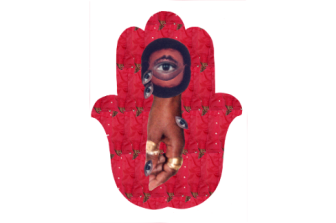
A New World of Paper - Gallery for Families
Collage is an important technique in art. It allows you to connect different worlds and create things that only exist in the imagination. To create a collage, you cut images from different sources, take them apart, and then put the pieces together in a new, surprising way. The odder the cuts and links, the more striking the resulting new creation.
Saturday, 22.02.25
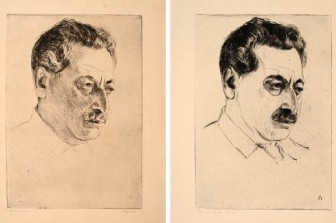
Reproductions and Expressions
The collection was started by Tzvi Neta’s father, Mr. Yosef (Joe) Boxenbaum, one of Israel’s first industrialists and a passionate Zionist, who purchased the works about two decades after Struck’s death, apparently from the artist’s widow. Much can be learned about Struck’s creative processes from this collection. Many of the prints were copies but not duplicates. Comparing them reveals much about the depth of thought involved in Struck’s work process. For this reason, I asked to curate an exhibit based on Mr. Neta’s donation.
Saturday, 04.05.24
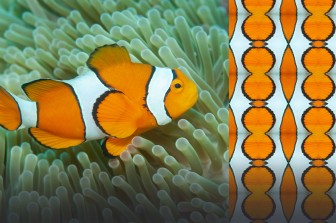
The Plentiful Sea | Art, Poetry, and Science in Marine Nature
Dr. Ramy Klein, a marine biologist, photographer, and writer, exemplifies the boundlessness of the sea by transcending the unseen barriers between scientific research, art, and poetry. To reflect the interplay between these three axes of intellect, vision, and emotion in Dr. Klein’s work, this exhibition is organized in three parts, showcasing his exploration of the marine environment through underwater photography.
Saturday, 01.02.25
Earth, water, wind, fire…and emptiness
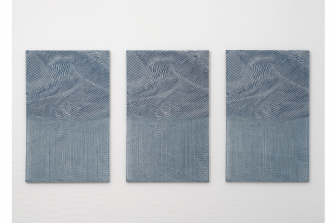
Earth, water, wind, fire... and space are the elements that make up the entire universe. They are part of an ancient doctrine that used them as a means of solving problems, and from that time they have been an inseparable part of a variety of disciplines - philosophy, art, medicine, astrology and even politics. The connection between the elements emphasizes the basic concept that they nurture each other and that every element in our world is mutually dependent on another and does not exist separately. This exhibition seeks to illuminate all five elements in the light of art and to present the interrelationships between them through the works shown.
Saturday, 18.11.23
Japanese Design Today 100
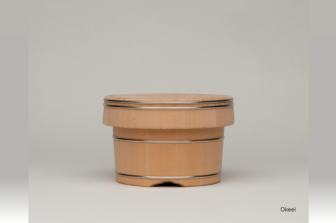
"Japanese Design Today "100” was first developed in 2004 and then toured the world for the following decade. Now we present the third edition of the exhibition, which again brings together superlative examples of Japanese design from a present-day perspective. The exhibition is organized according to thirteen categories among them - furniture, electronics, health, communication, daily life, tableware and cooking, transportation, architecture. The exhibition includes approximately 100 items, most of which are products released after 2000, but it also includes several masterpieces from earlier times in which we can trace the roots of contemporary Japanese design. From objects such as consumer products to intangible systems and services, the designs we use in our daily lives speak volumes about the evolution of our lifestyles and society.
Saturday, 23.11.24
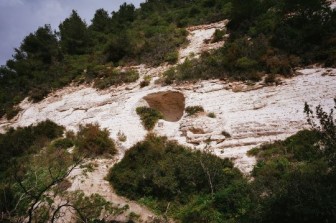
WADI
Wadi - is a hydrologic geological formation, and a term in Arabic, Hebrew, and English describing different forms of seasonal flow, associated with areas with little precipitation.
In Haifa, however, a wadi is also a mental state; the city's wadis are used for momentary respites from the routine, for various games, and for alternative community gatherings. At the same time, they also embed darkness, all sorts of waste, and complex ecosystems of flora and fauna, which exist in a world parallel to everyday life.
The exhibition addresses different manifestations of this alternate universe.
Saturday, 30.12.23
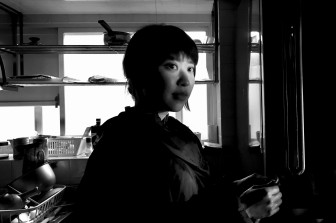
Light on Skin
At the age of 17, Michael Sela (born 1998) decided to become the best photographer in the world. Equipped with a Pentax film camera his father gave him, he embarks on a journey for the sole purpose of photography. This journey also takes place in Japan (2019), which becomes his home. Sela's photographs express sentimental and magical emotions at the same time. His photographs are a means of connecting with a different, distant Japanese reality, but which are also very intimate. He knows most of the people he photographs, and for him photography is capturing small moments in their midst. The people closest to him are photographed in a given space, because a photograph is a sliver of space as it is a sliver of time.
Saturday, 23.11.24
Please contact us and we will contact you as soon as possible